Shopify Updates This Week: The Changes That Affect Your Profit
Every Monday we pick the Shopify and ecommerce changes that actually move your profit: fees, taxes, shipping, ad costs and checkout. Each one comes with a date, a source, and a quick look at what it means in dollars. No feature roundups, no filler.
Week of October 26, 2026
This week in short
Change
Date
Who it affects
EU €2 handling fee per item on parcels from outside the EU
Applies from Nov 1, 2026
Stores shipping to EU customers from outside the EU
Meta's average price per ad up 14%
Reported Oct 21, 2026
Anyone running Facebook or Instagram ads
UPS and FedEx raise 2027 rates by 5.9% on average
UPS from Dec 21, 2026; FedEx from Jan 4, 2027
US stores shipping with UPS or FedEx
Checkout shows four or fewer payment methods as tiles instead of a list
Oct 22, 2026
Stores whose payment methods meet Shopify's display criteria, including four or fewer methods
Shopify changes how UK VAT is calculated on orders over £135
Oct 23, 2026
Stores selling to Great Britain from outside the UK
Shopify Rollouts can now schedule and test prices per market
Oct 23, 2026
Stores planning Black Friday or seasonal pricing
1. EU adds a €2 fee per item on parcels from November 1, on top of the €3 duty
Published October 22, 2026. Applies from November 1, 2026.
What changed: The EU has set its new "Union handling fee" at €2 per item for goods sold online and shipped into the EU from outside it. It comes on top of the temporary €3 customs duty per item that has applied to low-value parcels (up to €150) since July 1, 2026, when the old duty-free limit was removed. An "item" means goods of the same type in one parcel, so three identical T-shirts count as one item, while a T-shirt, a cable and a phone case count as three.
What it means for your profit: If you ship directly to EU customers from China, the US, the UK or another non-EU country, every item gets more expensive to deliver. Example: a customer orders a phone case and a charging cable in one parcel. That's 2 items, so €3 × 2 duty + €2 × 2 handling fee = €10 in charges, up from €6 in October. On a €35 order with €12 of margin, most of the margin is gone. Whether you or your customer pays it at the door depends on how your parcels are cleared, but either way it lands on that order. Stock that you import in bulk into an EU warehouse and ship from there is not hit by the per-item fee on each customer order.
What to do:
Check which of your EU orders ship from outside the EU (dropshipping suppliers, US or UK warehouses).
Recalculate your margin per order for those products and markets, including the €5 per item.
If you show prices with duties included, update them before November 1. Otherwise customers may be surprised by charges at delivery.
Reported October 21, 2026 (Meta's July–September results).
What changed: Meta reported that the average price per ad across Facebook, Instagram and its other apps rose 14% year over year in the third quarter, while the number of ads shown rose 10%. Ad revenue reached $63.1 billion, up 26%. In plain words: there is more competition for the same space, and each ad costs more going into the holiday season.
What it means for your profit: If your results follow the average, the same sales now cost more to buy. Example: you spend $3,000 a month on Meta. At 14% higher prices, the same results cost $3,420, which is $420 a month less profit. Or look at it as return on ad spend (ROAS): a campaign at a ROAS of 3.0 drops to about 2.6 if it gets 14% less for the money. If your margin after product costs, shipping and fees is 40%, you break even at a ROAS of 2.5, so a "good" campaign is suddenly close to zero profit.
What to do:
Know your break-even ROAS per product. It's 1 divided by your margin (40% margin = 2.5).
Judge campaigns on profit per order, not just ROAS, before raising Black Friday budgets.
Shift budget toward products with the highest margin, where higher ad costs hurt least.
3. UPS and FedEx raise 2027 shipping rates by 5.9%, UPS from December 21
UPS announced October 23, 2026 (effective Dec 21, 2026). FedEx effective Jan 4, 2027.
What changed: UPS will raise its Daily Rates for Ground, Air and International services by an average net 5.9% from December 21, 2026, right in the middle of holiday shipping. UPS Small Business Rates rise 4.5% on the same date, with a 5% fuel surcharge added. FedEx raises its standard list rates by an average of 5.9% from January 4, 2027, and adds new fees from January 18, including $25 per shipment when trade documents are on paper.
What it means for your profit: Shipping is often your second-biggest cost after the product itself. Example: if your average label costs $10, it goes to about $10.59. At 2,000 orders a month, that's around $1,180 a month less profit if you don't change anything. Surcharges such as delivery area fees aren't covered by the 5.9% average and can rise more.
What to do:
Check your free-shipping threshold and flat shipping rates against the new label prices before December 21.
If you print FedEx international labels, make sure trade documents are sent electronically to avoid the $25 paper fee.
Compare carriers on the products and zones you ship most.
Track shipping costs per order in Juicy to see which products and markets the increase hits hardest.
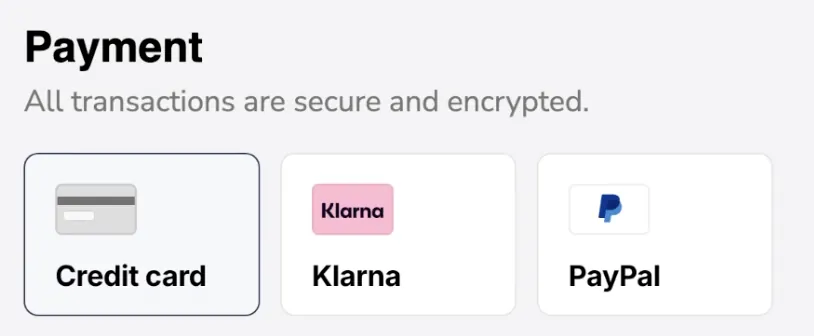
4. Shopify checkout now shows 4 or fewer payment methods as tiles, not a list
Since October 22, 2026.
What changed: Shopify checkout shows payment methods as tiles instead of a list when they meet Shopify's display criteria. Offering four or fewer payment methods is one of those criteria. Other setups keep the standard list. The tiles are more compact, so each method is easier to see.
What it means for your profit: The order and the names of payment methods affect which one customers pick, and that choice changes the fees you pay.
Want more control? With Juicy Hide&Sort Payment Rules you can reorder, hide and rename your payment methods at checkout.
5. Shopify stops charging UK VAT at checkout on some orders over £135
Announced October 23, 2026.
What changed: Shopify now calculates VAT for orders to Great Britain based on the warehouse that actually ships the order, the same way it already works for US tax. If an order is over £135 (before tax and shipping) and is routed to a location outside the UK, it's treated as an import, so VAT isn't charged at checkout. This applies even if your store also has a UK location. Orders of £135 or less, orders to Northern Ireland and existing orders aren't affected.
What it means for your profit: If you ship bigger UK orders from an EU or US warehouse, the 20% UK VAT is no longer collected at checkout and is handled at import instead. Example: on a £200 order that's £40 your customer can meet when the parcel arrives instead of at checkout. Unexpected charges at the door are a common reason for refused parcels, and a refused parcel means you pay shipping both ways and may lose the sale.
What to do:
Check your order routing for UK orders over £135.
Either route them to a UK location or turn on collecting duties and import taxes at checkout, as Shopify suggests.
Test one large UK order at checkout to see what the customer is charged.
6. Shopify Rollouts can now schedule and test your prices per market before Black Friday
Announced October 23, 2026.
What changed: Shopify's Rollouts tool now works with catalogs, which control product availability and pricing per market. You can switch catalogs on or off at a set date and time, run experiments between two catalogs on your online store, and launch catalog changes together with theme and checkout updates in one rollout.
What it means for your profit: You can set your Black Friday prices per market in advance and test two offers against each other instead of guessing. The offer that sells more isn't always the one that earns more. Example: a $60 product with $24 in product cost and $9 in shipping and fees leaves $27 of margin. At 15% off you keep $18 per order; at 25% off you keep $12. The 25% offer needs 50% more orders just to make the same profit.
What to do:
Build your sale catalog now and schedule it, instead of changing prices by hand at midnight.
If you test two discounts, compare profit per order, not just conversion rate.
Make sure your product costs are up to date before the sale, so the test results are right.
Shopify scales back its "leaving the store" warning (Oct 23, 2026). On October 20, stores started asking customers to confirm before every link to an outside website. Three days later Shopify changed it: only malicious sites are blocked and only suspicious sites get a confirmation. Sites you own but haven't connected to your store can still trigger it. Source
Managed Markets adds guaranteed flat-rate international shipping (Oct 24, 2026). Shopify can now set Standard and Express rates per country, and qualifying prepaid FedEx or DHL Express labels bought through Managed Markets won't be billed for later carrier adjustments. Requires duty-inclusive pricing. Source
FAQ
How often is this page updated?
Every Monday. The newest week is always at the top, and earlier weeks stay further down the page.
Which Shopify updates do you include?
Only changes that affect your profit: fees, taxes, shipping, payments, checkout and ad costs, from Shopify and from the wider ecommerce world. Every item has a date and a link to its source.
Does the new EU €2 fee affect my Shopify store?
It does if you ship orders to EU customers from outside the EU, for example from a supplier in China or a warehouse in the US or UK. From November 1, 2026, each item costs €2 on top of the €3 customs duty that has applied since July 1, 2026. Orders shipped from stock already inside the EU aren't charged per item.